Antigua
Guatemala’s colonial city — world-class to look at, and still genuinely affordable to live in.
Monthly cost
$1,200–1,700
comfortable, one person
Time zone
US Central
no daylight saving
Climate
Spring-like
warm days, cool nights
Best for
Culture-first,
wellness-minded
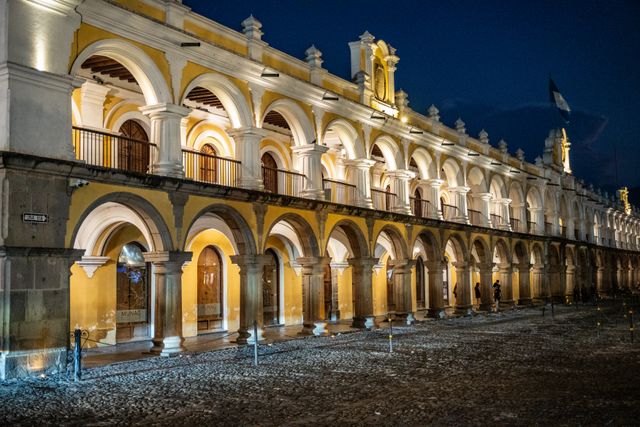
If you go looking for cheap places to live in Latin America, most lists throw beaches at you. Antigua trades the coast for something else: a small UNESCO colonial city up in the Guatemalan highlands, ringed by three volcanoes, full of cobblestone streets and old churches. The looks are what people fall for first, and the beauty comes cheap. The coffee and chocolate are grown right around town, and there’s a large, settled community of remote workers, retirees, wellness folks, and Spanish students who’ve already worked out how daily life runs here. The Quetzal has held steady against the dollar for years, so your budget stays predictable, and you’re never far from anything — Lake Atitlán, the Pacific, and the international airport are all within a couple of hours. Here’s the honest picture before you decide it’s yours.
Why people choose Antigua
What’s genuinely good
- The beauty is the draw, and it’s cheap: a walkable UNESCO colonial city framed by three volcanoes, for what a studio would cost you in most US cities.
- Extraordinary coffee and chocolate, grown in the highlands right around town — the café scene reflects it, and much of it is laptop-friendly.
- A large, settled international community — remote workers, retirees, wellness folks, Spanish students — plus more than thirty Spanish schools, so learning the language here is easy to start.
- The Quetzal has held steady against the dollar for years, so your budget stays predictable, and US dollars are widely accepted around the expat and tourist parts of town.
- It’s a gateway: Lake Atitlán a couple of hours off, the Pacific coast ninety minutes, and Guatemala City’s international airport about forty-five minutes away.
What you’re signing up for
- Spanish isn’t optional for daily life. English covers tourist businesses, coworking spaces, and language schools — and little else, so landlords, markets, and doctors take real Spanish.
- The tourist crowds are seasonal and real. November through April fills the center and pushes rents up twenty to thirty percent; May through October is quieter, cheaper, and more authentic, with afternoon rain.
- Home internet is fine but not exceptional — roughly 20–40 Mbps outside coworking spaces, which handles most remote work but can frustrate heavy video or big uploads. A coworking membership solves it.
- The cobblestones that make the city beautiful are hard on ankles, knees, and luggage wheels — sturdy shoes genuinely matter here.
- Guatemala’s wider safety picture needs awareness. Antigua itself is one of the safer small cities for expats, but Guatemala City calls for more care, and the country carries a higher US advisory than the town alone would suggest.
The honest cost picture
A comfortable month for one person in Antigua runs roughly $1,200 to $1,700. It’s one of the more affordable places in the Americas, and you’re getting a world-class setting for the money. Where you land inside that range depends heavily on your rent — season and neighborhood both move it a lot here — and on how much you lean on local comedores versus tourist-facing restaurants. The currency is stable, so there’s no exchange-rate surprise, but center rents have been creeping up a few percent a year and jump in peak season.
$1,200–1,700 / month · one person, comfortable
That’s the honest range — enough to know whether Antigua belongs on your list. Where you actually land depends on your rent, the season you arrive in, and whether you’re in the colonial center or a village just outside it.
What the toolkit adds for Antigua
- The full itemized monthly breakdown — rent, groceries, transport, healthcare and insurance
- The neighborhood read — the colonial center versus the quieter surrounding villages, what each costs and how the internet holds up
- The complete GF/DF read, the visa and CA-4 specifics, and the honest downsides in full
- A calculator that runs your own current spending against Antigua
- The week-by-week plan — plus eleven more cities
Eating gluten- and dairy-free in Antigua
Guatemalan food leans strongly gluten-free at its base — corn tortillas rather than wheat, black beans, rice, grilled meats, vegetables and plantains, with traditional dishes like pepián and jocón generally safe. The thing to watch is breakfast, where pan dulce and wheat pastries turn up, so eggs, corn tortillas and fresh fruit are the reliable route. Dairy shows up moderately — queso fresco and crema appear as toppings you can decline — and Antigua’s international café scene and organic markets stock dairy-free alternatives if you want them. The coffee and chocolate, both grown nearby, are a genuine bonus, and artisan chocolate shops often carry naturally dairy-free bars. Naturally GF-leaning, and functional day to day with a little planning.
Healthcare, safety, and staying legal
Healthcare for everyday needs is handled locally — a private hospital and clinics in town, doctor visits at a fraction of US prices, and dentistry good enough that people fly in for it; for specialists and serious conditions, Guatemala City is about forty-five minutes away. Safety is a real reason people settle here: Antigua is one of the more secure small cities for expats in the region, with petty theft the main thing to guard against, though the wider country needs more awareness than the town itself. On staying legally, US citizens get 90 days on arrival — but Guatemala shares that window with three neighboring countries under a regional agreement, which makes border runs trickier than they first look; for the long term, Guatemala has one of the more accessible retirement-residency routes in the Americas.
The exact visa thresholds, how that shared-90-day rule actually works, the insurance specifics, and the neighborhood-level detail are in the toolkit, because those are the parts worth getting exactly right rather than guessing.
See what a month in Antigua would really cost you
The full Antigua guide inside the toolkit gives you the itemized breakdown, the neighborhood-by-neighborhood detail, the visa and CA-4 specifics, and a calculator that runs your own budget against it — plus eleven more cities and a week-by-week plan.
Get the toolkit — $47Not sure Antigua’s your city yet? Take the 2-minute quiz or run your number through the cost calculator first.
Cost figures are total monthly estimates for one person and vary by neighborhood, season, and lifestyle. They’re starting points for your own research, not guarantees. Residency rules change — verify current visa, CA-4, and residency requirements with your nearest Guatemalan consulate or a licensed Guatemalan immigration attorney before applying.